
 CALL NOW
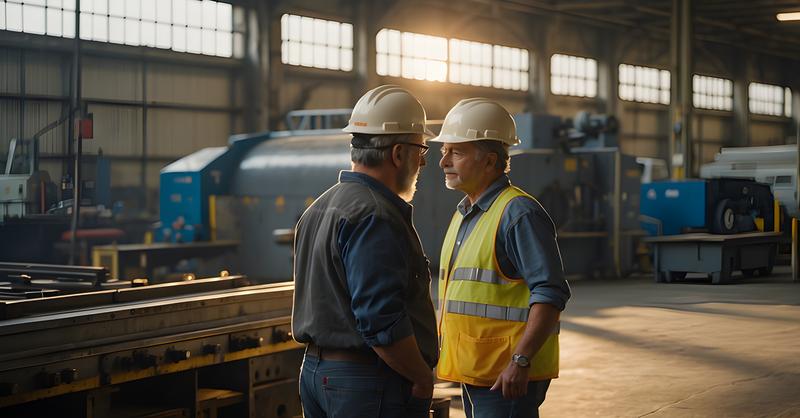
Over a decade of running CNC fabrication lines out of Kearny, New Jersey, I’ve watched mechanical contractors get burned — not by bad welds or wrong gauges, but by logistics failures that had nothing to do with the metal itself. A late truck. A missing bundle of hanging hardware. An estimator who takes three days to return a quote on a job that bids out tomorrow morning. That’s where most sheet metal operations quietly fall apart.
So when contractors ask me what separates a real custom metal fabrication shop from a warehouse with a plasma cutter and a phone number, I tell them the answer isn’t the equipment. It’s the system behind the equipment.
Winning a commercial bid in Hudson County, Bergen County, or anywhere across the five boroughs comes down to speed and accuracy hitting the same window simultaneously. Most fabricators still run manual take-offs — a guy with a ruler and a spreadsheet, scaling blueprints the old-fashioned way. That’s not a complaint about craftsmanship; it’s a structural bottleneck. When your bidding cycle is 24 to 48 hours and your fabricator needs three business days to confirm material quantities, you’re already behind.
At our Kearny facility, we ingest digital take-off sheets and architectural files directly into our estimating software and turn accurate, competitive material and labor estimates in a compressed 4-to-24-hour window. I know that sounds like a pitch. But honestly, it’s just table stakes for the pace that contractors in this market are running at.
What does a 24-hour turnaround on a fabrication estimate actually mean for a mechanical contractor bidding a commercial project in New Jersey?
It means you can submit a complete, competitively priced bid the same day you receive the architectural files — rather than holding the bid package open, waiting on your fabricator to confirm quantities. In a market like Newark or Jersey City where GC relationships run on bid velocity, that’s real money on the table.
Here’s something I don’t see discussed much: a bad material estimate doesn’t just cost you margin on one job. It damages your credibility with the GC when you come back mid-project asking for a change order because the original scope was under-quoted. We’ve seen it. A mechanical contractor in Passaic County lost a repeat client relationship over exactly that kind of discrepancy — not because the ductwork was wrong, but because the original quote was built on a rushed manual count that missed a transition run on the third floor. Small error, expensive consequence.
If you’re fabricating ductwork for commercial projects in New Jersey or New York, SMACNA standards aren’t a marketing badge. They’re a code requirement baked into municipal inspection checklists across every county we serve. I’ve seen installs get flagged during inspection in Essex County because the duct gauge didn’t match the specified pressure class — costing the contractor a re-fabrication order and a delay that bled straight into their labor budget.
Our fabrication lines run rectangular, round, spiral, and oval duct configurations across an 18-to-26-gauge galvanized baseline, with specialty runs in stainless steel, aluminum, and PCD for pharmaceutical, food-service, and coastal rooftop environments. When a project specifies double-wall insulated duct for acoustic applications — something you see regularly in healthcare and Class-A office buildouts — we handle the full assembly in-house, not through a subcontractor arrangement that adds a week to your timeline.
For a deeper look at how material selection impacts project performance, this breakdown on commercial ductwork materials covers what top contractors are actually specifying and why.
This one is almost embarrassing how common it is. A contractor places a ductwork order with one fabricator, buys installation hardware from a separate distributor, sources sealants and line sets from a third vendor, and then tries to coordinate three separate delivery timelines onto the same job site. Inevitably, one of those trucks rolls in at 2:30 in the afternoon — after your installation crew has been standing around since 7:00 AM waiting on material.
That’s not a logistics inconvenience. That’s four to six hours of skilled labor burned on a delay that could have been completely avoided.
How do Tri-State mechanical contractors typically source both fabricated ductwork and installation supplies on the same order?
At HVAC Metals, we bundle custom-fabricated metal directly with the installation hardware, sealants, and hanging materials needed for the job. One purchase order, one delivery, one logistics loop. It’s not a complicated concept, but very few sheet metal operations actually execute it cleanly.
Our in-house fleet of box trucks delivers to job sites as early as 6:00 AM. I want to be specific about why that timing matters — because it isn’t just about being punctual. It’s about protecting the first two hours of your crew’s installation window, which is typically the highest-velocity period of the workday before site congestion, inspection visits, and subcontractor coordination start fragmenting the schedule.
If you’re running a commercial retrofit in Midtown Manhattan, your rigging window might open at 6:30 AM before pedestrian traffic makes crane operations untenable. If material isn’t on the deck when that window opens, you’re rescheduling the lift — and that’s a cost that hits the contractor, not the fabricator. Routing your logistics through our Kearny headquarters at 181-183 Garfield Ave, Kearny, NJ 07032 means our fleet is already moving before the Pulaski Skyway backs up and long before your crews clock in.
Um, I realize “250-ton Accurpress” sounds like spec-sheet noise unless you’re the one reviewing a fabrication error on the deck at 7:00 AM. So let me frame it practically: high-capacity bending and shearing up to 1/4-inch material thickness across 10-foot lengths means we’re not farming out heavy structural components to a third-party shop with a two-week queue. Custom roof curbs, equipment rails, curb adapters engineered to bridge legacy curbs and new RTUs — all of that runs through our in-house system.
The curb adapter piece specifically is worth calling out. When a rooftop unit replacement involves a legacy curb that doesn’t match the new RTU footprint, contractors in Bergen County and across the five boroughs are often left improvising on the roof — shimming, field-welding transitions, or ordering a generic adapter that doesn’t sit flush. We engineer those adapters to spec from the blueprint. No field adjustment required. Here’s a detailed breakdown of how custom curb adapters eliminate that exact friction point.
Are custom curb adapters fabricated to SMACNA standards readily available for legacy rooftop unit replacements in New Jersey?
Yes — but not from most general sheet metal shops. The geometry has to be engineered from the original curb dimensions and the new RTU footprint simultaneously. We handle that in-house using CNC plasma cutting and laser profiling, which gives us the dimensional accuracy to eliminate field rework.
Galvanized steel is the baseline — 18 to 26 gauge covers the majority of standard commercial ductwork runs across North Jersey and the boroughs. But the material conversation gets more nuanced fast when you start working in environments with specific exposure conditions.
Pharmaceutical cleanrooms in Somerset County? Stainless steel, full stop. The hygiene protocols in those environments don’t tolerate galvanized. Food-service kitchen exhaust systems in Brooklyn or Hoboken? Stainless or high-temprature rated PCD depending on the grease load and local fire code classification. Coastal rooftop installations in areas with salt-air exposure — aluminum for structural load minimization, or galvanneal where corrosion resistance is the priority over weight.
None of this is exotic fabrication. It’s just what the project environment actually demands. The contractors who get burned are the ones whose fabricator doesn’t ask the right questions before cutting the first sheet.
High-strength MIG and TIG specialty welding runs through our fabrication lines for plenums, transitions, offsets, and structural components where weld integrity is load-bearing — not cosmetic. This matters particularly for equipment rails and structural support frames on rooftop installations where NJ wind load and structural codes have specific weld requirements. Equipment rails built wrong become a liability issue quickly — and that’s not a hypothetical.
We cover all 21 New Jersey counties, the five boroughs of New York City, and strategic commercial regions across Eastern Pennsylvania. That footprint sounds broad on paper, but the reason it works is that we’re not coordinating deliveries through a third-party freight broker who doesn’t know the difference between a tight loading window in Midtown and a standard dock delivery in Parsippany.
Our drivers know this market. They know which Manhattan job sites require a specific COI before the truck can pull up. They know the delivery logistics around active construction corridors in Queens. That’s a meaningful difference when a late or misdirected delivery doesn’t just inconvenience the project — it triggers a labor cost that comes straight off the contractor’s margin.
Does HVAC Metals, LLC serve mechanical contractors in all five boroughs of New York City, or only New Jersey?
We serve New Jersey statewide, all five NYC boroughs, and Eastern Pennsylvania — operating out of our Kearny, NJ facility with an in-house fleet structured for early-morning metropolitan deliveries.
Follow us on LinkedIn and Facebook for project updates, fabrication insights, and supply chain logistics we share regularly with the contractor community across the Tri-State area.
| Capability Area | Generic Sheet Metal Shop | HVAC Metals, LLC (Kearny, NJ) |
|---|---|---|
| Estimation Turnaround | 2-5 business days, manual take-off | 4-24 hours, digital file ingestion |
| Delivery Timing | Standard freight, afternoon window | In-house fleet, 6:00 AM job site delivery |
| Supply Chain Scope | Ductwork only, separate hardware sourcing required | Fabricated metal + hardware + sealants in one bundled order |
| Fabrication Range | Standard gauges, limited specialty alloys | Galvanized, stainless, aluminum, PCD, galvanneal, copper |
| Specialty Components | Outsourced or unavailable | In-house: curb adapters, rails, plenums, transitions, welding |
| Code Compliance | Variable, not always documented | Full SMACNA compliance, NJ and NY municipal code alignment |
The process isn’t complicated, but I want to walk through it plainly because the expectation-setting up front is what determines whether a job runs smoothly or turns into a phone-tag situation halfway through fabrication.
If you want a broader picture of how we structure our fabrication process for HVAC contractors across the region, our sheet metal fabrication service page covers the full scope of what runs through our Kearny lines.
We’ve been running this operation since 2015. Over eleven years of fabricating ductwork, structural components, and specialty metal for the most logistically demanding construction market in the country, I’ve watched a lot of contractors lose margin not to bad metal, but to bad systems. Wrong delivery time. Mismatched hardware. An estimate that took so long the bid window closed.
The point of a well-run custom metal fabrication shop isn’t just to cut and bend metal accurately — any decent shop can do that. It’s to make every step between your blueprint and your job-site installation as tight and predictable as the metal itself.
If your current fabrication partner isn’t running at that standard, reach out. We’re at 181-183 Garfield Ave, Kearny, NJ, and we’ll have a quote back to you before the end of the business day.
Written by: Arthur Dabrowski
HVAC Metals, LLC
(201) 991-2206