
 CALL NOW
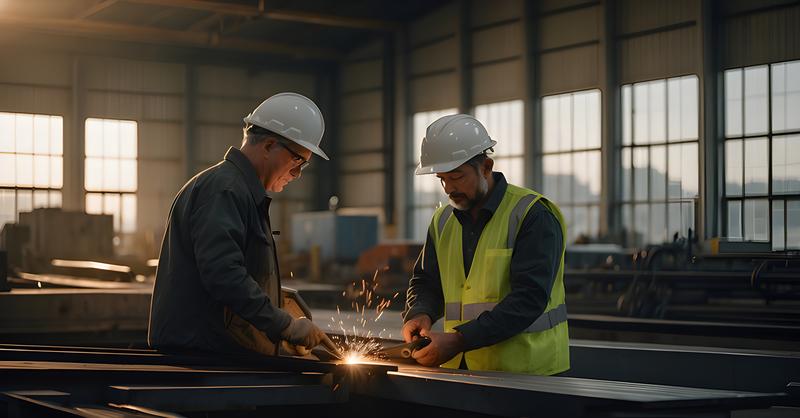
If you’ve been managing mechanical contracts across Hudson County, Bergen County, or anywhere in the five boroughs long enough, you already know the answer isn’t just “good metal.” It’s everything surrounding the metal — the timing, the accuracy, the hardware that needs to ship with it, and the supplier who actually picks up the phone when the field crew is standing there waiting at 6:45 AM asking where their duct sections are.
I run HVAC Metals, LLC out of 181-183 Garfield Ave, Kearny, NJ 07032. We fabricate SMACNA-compliant rectangular, round, spiral, and oval ductwork, process specialty metals through a 250-ton Accurpress system, and run our own fleet of box trucks that hit job sites before most contractors have finished their first coffee. Over ten years of doing this — since 2015 — I’ve watched the gap between serious ductwork fabrication shops and generic metal suppliers get wider, not smaller. The contractors who know the difference win bids. The ones who don’t burn labor margins chasing down late deliveries or reworking field dimensions.
So let’s talk about what actually separates a quality duct installation shop from everything else out there — and why it matters more now than it ever did.
Walk into a traditional sheet metal shop and ask them for a quote on a 40-zone commercial retrofit in Newark or a high-rise pre-fab package for a job in Midtown. A lot of them will hand you a legal pad and say they’ll call you back in three or four days. No joke.
The industry hasn’t kept pace. Manual take-offs, paper-scaled blueprints, phone-tag estimating — that’s still the norm at a surprising number of shops. And for a mechanical contractor running a competitive bid cycle, waiting 72 hours for a material quote isn’t a minor inconvenience. It’s the difference between winning the job and watching someone else take it.
At our Kearny facility, we ingest contractor blueprints and digital take-off sheets through specialized estimating software and return highly accurate material and labor figures within a 4-to-24-hour window. Not because it sounds impressive on paper, but because that’s what the bid timeline actually requires. A project manager in Hackensack bidding a school HVAC retrofit doesn’t have three days to wait on a quote. He needs to move.
What does quality ductwork fabrication actually look like from a mechanical contractor’s standpoint?
It means receiving duct sections that are dimensionally exact — right gauge, right geometry, right fitting configurations — so your field crew can hang them without grinding, shimming, or improvising on the roof deck. It means your plenum transitions hit the unit curbs without a half-inch gap that turns into an argument with the GC. And it means the shop actually understands SMACNA standards, not just claims they do.
Here’s something I see constantly with contractors who haven’t consolidated their procurement: they’re buying custom ductwork from one fabricator, sourcing hanging hardware from a second distributor, picking up sealants and line sets from a third vendor, and then trying to coordinate three separate delivery timelines into a single installation window. It’s a logistical mess — and the field crew pays for it in idle hours.
One contractor I worked with — running a mid-size mechanical firm out of Union County — told me he’d lost nearly a full day of installation time on a commercial retrofit in Elizabeth because his duct sections arrived on time but his companion hardware showed up the next afternoon. His guys had nothing to hang. Stood there basically organizing the van. That’s not a minor workflow hiccup. At union labor rates in New Jersey, that’s a serious financial hit.
We structured our operation to close that gap. When a contractor places an order with us, the custom-fabricated metal ships bundled with the installation hardware, sealants, and hanging materials — everything needed to move from delivery to install without a second procurement loop. One purchase order. One delivery. One timeline to manage.
(And before someone asks — no, we didn’t build it this way because it’s a clever marketing angle. We built it this way because contractors kept telling us the split-vendor model was destroying their morning velocity.)
Not every duct material is right for every application, and this is where generic fabricators tend to fall short. They’ll quote you galvanized steel across the board because it’s simple. The reality in New Jersey, New York, and Eastern Pennsylvania is that job conditions vary enormously — and the wrong material spec can create code compliance issues, corrosion problems, or structural failures down the line.
How do contractors know which sheet metal gauge to specify for high-humidity or corrosive environments?
Honestly, a lot of them rely on their fabricator to flag it — which is why your fabricator needs to actually understand the application, not just process an order. We work across a range of metals at the Kearny facility precisely because Tri-State job conditions demand it:
When a contractor is speccing ductwork for a commercial kitchen retrofit in Jersey City or a pharmaceutical facility in Parsippany, they shouldn’t have to argue with their fabricator about whether stainless is appropriate. That call should come from experience, not a catalog page. For a deeper look at how material selection plays out across real commercial projects, our guide on commercial ductwork materials and what top contractors actually choose breaks it down by application.
I’ve had contractors laugh a little when I mention the 6:00 AM delivery window — like it’s a branding gimmick. It’s not. It’s the single most operationally significant thing we do.
If you’re managing a commercial job in Midtown Manhattan with a tight rigging window — crane permit from 7:00 AM to 10:00 AM, zero street staging, and foot traffic that starts building before most people finish breakfast — your duct sections have to be on the deck before the rigging crew clocks in. A standard delivery truck caught in the Lincoln Tunnel backup at 8:30 AM doesn’t just mean a late shipment. It means a blown rigging window, a crane operator who bills regardless of whether materials showed up, and a GC who starts asking questions.
Our corporate fleet routes out of Kearny every morning to hit job sites across New Jersey, the five boroughs, and Eastern Pennsylvania before the highways bottleneck. That’s not luck — it’s a logistics model built specifically around protecting the contractor’s installation velocity.
Do duct install shops in New Jersey typically handle permit coordination for commercial projects?
Most don’t. Fabricators generally stop at manufacturing and delivery. Permit coordination, SMACNA compliance documentation, and code alignment are usually left to the contractor or a third party. At HVAC Metals, we’re built to support the contractor’s full workflow — which is why our estimating process accounts for regional code requirements from the start, not as an afterthought. If you’re working across New Jersey’s 21 counties, the municipal code variations alone are enough to create delays if your fabricator isn’t tuned into them.
There’s a version of “custom ductwork” that’s basically hand-cut sheet metal with generous tolerances and the expectation that the field crew will make it work. And then there’s what comes off a properly calibrated CNC plasma cutting table or laser profiling system — dimensions that match the take-off sheet exactly, geometry that holds to spec, fittings that don’t require field adjustment to seat properly.
The difference shows up immediately on the job site. A curb adapter that’s an eighth of an inch off means your crew is up on the roof shimming, re-sealing, or — worse — calling back to the shop while the RTU sits uncovered. We’ve run high-capacity CNC systems at our Kearny facility since the beginning. The reason is straightforward: field adjustments are expensive, and they’re almost always the result of a fabrication tolerance problem, not an installation problem.
Specialty components are where this matters most — custom roof curb adapters engineered to transition between legacy curbs and new RTUs, equipment rails, plenums, transitions, offsets. These aren’t forgiving geometries. A few thousandths off and the whole assembly fights you. Our custom curb adapter process for RTU replacements goes into how we handle the dimensional complexity on legacy commercial roof transitions — worth reading if you’re managing an older building retrofit.
Not every ductwork application requires high-strength welding. But when it does — pharmaceutical exhaust systems, commercial kitchen grease duct, heavy industrial configurations — MIG/TIG capability isn’t optional. We run specialty welding in-house because outsourcing it introduces timeline variability we’re not willing to accept. When a contractor needs a welded stainless exhaust plenum for a food-processing facility in Piscataway, the answer shouldn’t be “we’ll sub that out and get back to you in a week.”
What’s the typical lead time for custom SMACNA-compliant ductwork from a New Jersey fabrication shop?
It varies more than contractors expect — anywhere from same-day for standard galvanized sections we stock in common gauges, to several days for fully custom specialty configurations. The honest answer is that lead time is directly tied to how clearly the take-off data is communicated and how fast the shop can process it. With our digital estimating intake, we can compress that window significantly compared to shops still working off faxed blueprints (yes, that still happens).
If you’re a mechanical contractor evaluating fabrication shops for a new project — whether it’s a residential HVAC replacement in Middlesex County or a large commercial install across multiple floors in Brooklyn — the checklist that actually matters looks something like this:
The shops that can’t check most of those boxes aren’t necessarily bad at fabrication. They’re just structured for a simpler, slower version of the business. Which is fine — until you’re running a tight commercial timeline in Bergen County and your crew is standing on a roof waiting for materials that should have been there two hours ago.
We cover more of this in our breakdown of what separates top duct install shops from average HVAC fabricators — practical criteria, not marketing language.
We serve all 21 New Jersey counties, the five boroughs of New York City, and strategic industrial regions across Eastern Pennsylvania. That coverage isn’t a list on a webpage — it’s a fleet routing structure, a code knowledge base, and a logistics model built around the real delivery constraints of dense urban corridors and sprawling suburban job sites. Drop me a line through our contact page if you want to talk through a specific project or get a quote moving.
Are there minimum order requirements for custom ductwork fabrication in the Tri-State area?
Depends on the shop. We work with both high-volume repeat contractors and smaller firms with single-project needs — though honestly, the more lead time you give us, the better we can sequence your job into our production line without rush pressures affecting fit tolerance. Custom configurations on tight deadlines are doable, but they’re not our favorite version of the conversation.
Follow what we’re doing on LinkedIn and Facebook if you want to see fabrication runs, specialty project updates, and occasional field photos from job sites around the Tri-State area. We post the kind of stuff that actually shows you how the shop operates — not polished marketing content.
The mechanical contractors who build their procurement around a single, reliable fabrication partner — one shop that handles custom metal, ships with hardware, delivers before dawn, and quotes within a day — spend less time managing supply chain chaos and more time running productive crews. That’s the whole model. Everything else is just details.
Written by: Arthur Dabrowski
HVAC Metals, LLC
(201) 991-2206