
 CALL NOW
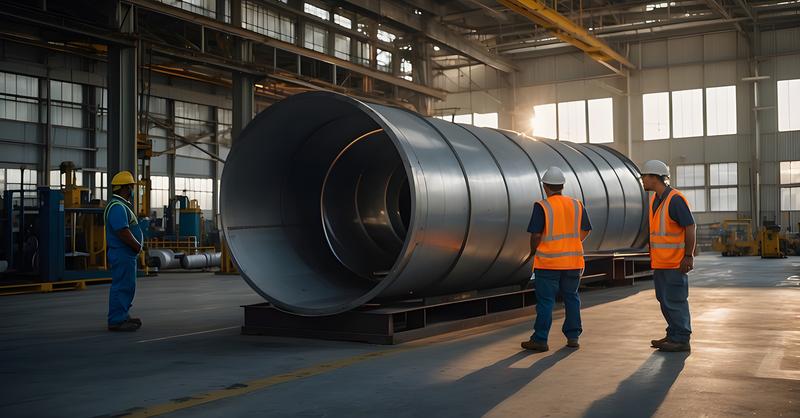
When you’re searching “sheet metal fabrication near me” at 7 PM trying to lock down material for a Monday start, you’re not looking for a philosophical answer. You need someone who can read your take-off sheet, quote it fast, fabricate it to SMACNA spec, and get it on the deck before your crew clocks in. That’s the whole job.
I’ve been running CNC fabrication lines out of Kearny, New Jersey since 2015, and over ten years of working with mechanical contractors across all 21 New Jersey counties, the five boroughs, and stretches of Eastern PA, one thing stays consistent: the fabricator either fits into your schedule or they don’t. There’s no middle ground on a commercial job site.
Most shops aren’t bad at metal. They’re bad at logistics.
The standard industry model goes something like this: you submit a blueprint on Monday, they call you back Wednesday (maybe Thursday), give you a rough number with a handful of vague line items, promise delivery “sometime in the afternoon,” and then your crew stands around the job site at 9 AM with nothing to install. You’re burning $400 an hour on idle labor while the truck is somewhere on the Turnpike.
That’s not a fabrication problem. That’s a business model problem. Shops that still run manual take-offs and paper-heavy quoting workflows are operating at a speed that made sense in 2005. They can’t keep up with the bid cycles that commercial HVAC contractors are running today.
We built something different at HVAC Metals, LLC. Our estimating platform ingests your architectural files, digital take-off sheets, or blueprint scans and outputs a fully itemized, competitive material and labor estimate inside 4 to 24 hours. Not three days. Not “we’ll follow up.” Same business day or next morning.
Here’s a pattern I’ve seen wreck schedules on Bergen County retrofits, Manhattan commercial installs, and suburban NJ ground-ups alike: the contractor buys ductwork from Fabricator A, sources hanging hardware from Distributor B, picks up sealants and line sets from a third vendor, and then tries to coordinate three separate delivery timelines onto one job site. Something always arrives late. Usually two things.
We run a one-stop procurement loop. Your custom ductwork, fabricated to spec, ships bundled with your installation hardware, sealants, and hanging materials in a single order from our facility at 181-183 Garfield Ave, Kearny, NJ 07032. One PO. One delivery. No coordination gymnastics.
Does that mean we’re the right fit for every project? Probably not a $15,000 residential swap-out. But for any commercial mechanical contractor managing a multi-phase HVAC installation who needs precision-fabricated ductwork with zero field adjustment? Yeah. That’s exactly who we built this for.
Getting materials on the deck by 6:00 AM is not a marketing hook. It’s a financial decision that protects your crew’s installation velocity from the moment they show up.
Think about a commercial retrofit in Midtown Manhattan. You’ve got a rigging window that opens at 7 AM and closes by 9 AM because the building management isn’t allowing hoisting during peak pedestrian hours. If your ductwork delivery shows up at 10 AM on a standard freight run, that rigging window is gone. Your crew waits. The day collapses. And you’re eating the labor cost on a contract that didn’t account for that kind of friction.
Our corporate fleet of box trucks runs out of Kearny before the Lincoln Tunnel or the Pulaski Skyway even start stacking traffic. We route the deliveries to hit job sites as early as 6:00 AM, which means your materials are staged and ready when the rigging crew shows up. That’s not logistics for logistics’ sake. That’s protecting your morning installation velocity, which is the most productive window on any commercial job site.
(And yeah, I know contractors in the Bronx who’ve been burned by afternoon deliveries twice in the same week on the same project. It happens more than people admit.)
On the manufacturing side, we run a 250-ton Accurpress with Accurshear system for bending and shearing up to 1/4-inch thickness by 10-foot lengths. For cutting, we use automated CNC plasma tables and CNC laser profiling. If your project calls for high-strength MIG or TIG specialty welding, that’s in-house too.
Here’s the material range we process regularly:
When specifying material for a coastal or high-humidity application, like rooftop units in the outer boroughs or waterfront commercial buildings in Hudson County, standard galvanized doesn’t always hold up the way contractors expect. We’ve run enough PCD and galvanneal through our shearing lines to know where the line is.
Want to see how this plays out on a real project scope? The breakdown at Local Sheet Metal Fabrication: When Speed & Quality Matter walks through the logistics in more detail.
Dead accurate. That’s the answer.
If a curb adapter is off by even an eighth of an inch, your field crew is filing, shimming, and improvising on the roof deck instead of completing the install. Every minute of that field adjustment is labor overhead that doesn’t appear on any blueprint but absolutely shows up on your job cost report.
What gauge of galvanized steel is typically used for commercial HVAC ductwork in NJ? For most commercial applications, you’re looking at 22 to 24 gauge for low-pressure systems and stepping up to 18 to 20 gauge for medium and high-pressure configurations, all per SMACNA performance standards. The gauge call depends on duct size, pressure class, and the building code requirements of the specific municipality you’re working in. Bergen County and Essex County applications often carry slightly stricter inspection protocols than some suburban counties, so we always verify before cutting.
Having run blueprint take-offs through our system since 2015, I can tell you that treating the spec sheet as law rather than a suggestion is what eliminates field rework. Our fabrication team doesn’t interpret loose tolerances generously. We hold them.
Custom roof curb adapters are a good example of where generic fabricators fall short. When you’re replacing an RTU on a 15-year-old commercial building, the existing curb geometry almost never matches the new unit’s footprint. You need an engineered adapter that transitions the old curb to the new RTU dimensions without structural compromise.
We engineer and fabricate those adapters in-house. No outsourcing, no waiting on a specialty vendor, no three-week lead time. The whole breakdown on how that process works is at Custom Curb Adapters: The RTU Replacement Solution if you’re managing that kind of replacement project right now.
How fast can I get a quote for custom ductwork fabrication in Hudson County? When you submit your blueprint or take-off sheet through our system, we turn around a fully itemized estimate within 4 to 24 hours during business days. For straightforward rectangular or round duct configurations, it’s typically the faster end of that window.
So a contractor from Union County calls us mid-week, says they’ve got a commercial office retrofit starting the following Monday, three floors, mix of rectangular and spiral duct, needs curb adapters for two rooftop units that are getting swapped out. Standard scenario for us, but there’s a wrinkle: the building’s loading dock has a strict 6 AM to 8 AM delivery window before the building goes into operating mode.
We pulled their digital take-off, quoted it by end of day Thursday, confirmed material specs Friday morning, ran the fabrication through the weekend (which, honestly, the CNC plasma tables don’t care what day it is), and delivered to the loading dock at 6:15 AM Monday. The crew was hanging duct by 7:30 AM.
Not every job goes that cleanly. We’ve had laser profiling schedules get tight when two large commercial orders land the same week, and that’s a real production management challenge. But the fleet and the early-bird commitment don’t flex. If the delivery window is 6 AM, the truck leaves Kearny with enough lead time to hit it.
Can a local NJ fabricator handle both the ductwork and the installation supplies in one order? Yes. We bundle custom-fabricated metal with hanging hardware, sealants, and line sets into a single order. One purchase order, one delivery, no coordinating between three different vendors on a Monday morning when you’ve got a crew waiting.
Our trading footprint covers all 21 New Jersey counties, the five NYC boroughs, and strategic industrial and commercial corridors in Eastern PA. That’s not a marketing claim, that’s an operational commitment backed by a dedicated fleet routing system out of our Kearny headquarters.
Each market has its own logistical character. A delivery to a commercial high-rise retrofit in Lower Manhattan requires navigating freight elevator booking windows and zero-tolerance for late arrivals. A delivery to an industrial facility in Burlington County, NJ, is a different kind of coordination entirely, often involving larger format duct sections and tighter staging areas on the production floor. Both get the same 6 AM fleet commitment.
If you want to visit or coordinate a pickup directly, we’re at 181-183 Garfield Ave, Kearny, NJ 07032. We’re a North Jersey shop, rooted in this community, not a regional franchise with a dispatch center three states away.
Manhattan, Brooklyn, Queens, the Bronx, Staten Island. Each borough carries its own compliance density, rigging constraints, and delivery logistics. Crane permit timelines in Midtown are nothing like a straightforward rooftop delivery in Staten Island. Contractors working in the five boroughs can’t afford a fabricator who treats “New York” as one homogeneous market.
We’ve been routing deliveries into all five boroughs long enough to know where the friction points live. That institutional knowledge is part of what we bring, not just the metal.
What metals does a commercial HVAC fabricator near me typically stock for NJ and NY projects? At HVAC Metals, LLC, we process galvanized steel, stainless steel, aluminum, copper, PCD, and galvanneal. The right material depends on the application environment: pharmaceutical cleanrooms call for stainless, coastal rooftop applications often benefit from galvanneal or aluminum, and standard commercial ductwork runs on galvanized.
If you’re evaluating custom metal fabrication shops for a commercial HVAC project, the questions that matter most aren’t the ones on the standard vendor checklist.
Ask them how they handle a take-off. If the answer involves printing your PDF, scaling it by hand, and calling you back in 48 hours, that’s a 2008 workflow running on a 2025 job site. Ask how they handle partial-week delivery windows. If they ship via third-party freight on a standard afternoon route, you’re gambling with your morning installation schedule. Ask whether they can bundle ductwork with installation hardware. If the answer is “you’d have to source that separately,” you’re adding supply chain coordination to your plate that you didn’t budget for.
The technical specs matter too, of course: SMACNA compliance, gauge range, available geometries, specialty welding capability. But a shop can have all the right equipment and still cost you money on every project if their logistics model is fragmented.
Our full fabrication and service breakdown is at HVAC Metals, LLC Sheet Metal Fabrication Services. If you want to talk through a specific project scope, reach out directly through our contact page and we’ll get a quote running the same day.
You can also follow what we’re working on through LinkedIn and Facebook. We post real project work, not stock photography.
Sigh, look, I know every fabricator says they’re different. I get why you’d be skeptical. The proof is in the delivery timestamp and the zero-rework rate when the duct actually hangs. That’s the only metric that matters on a job site.
Written by: Arthur Dabrowski
HVAC Metals, LLC
(201) 991-2206