
 CALL NOW
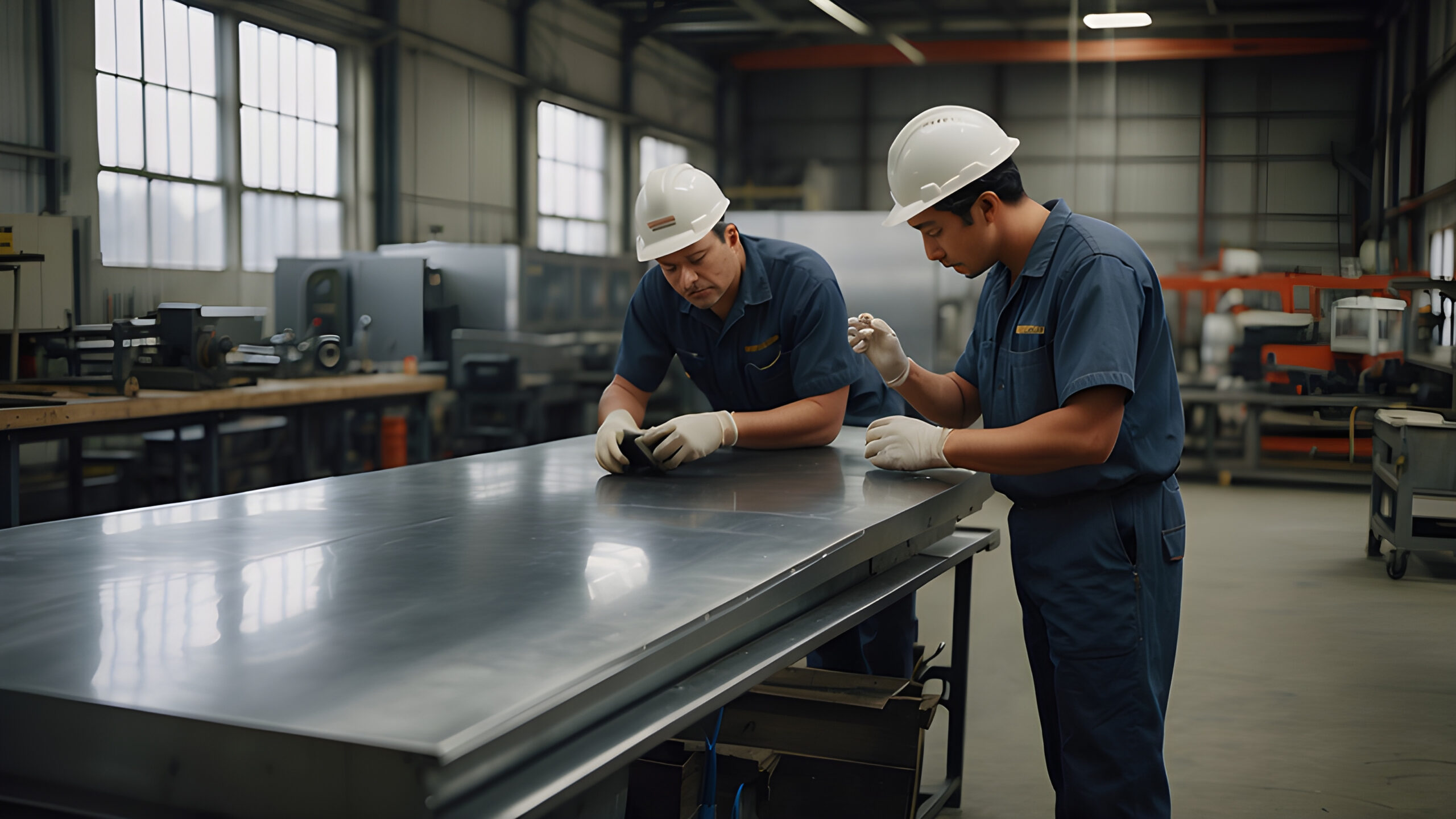
Short version: Kearny, New Jersey. Twelve minutes from the Lincoln Tunnel. That’s where we run our shop.
I’ve been fabricating SMACNA-compliant rectangular and flat oval duct for commercial and multifamily projects across Hudson County, Manhattan, Brooklyn, and the Jersey City waterfront since 2015. Over a decade of this work teaches you a few things fast, one of them being that most mechanical contractors in this corridor don’t have a reliable custom fabrication source that also understands what it costs to lose a morning on a congested job site.
That gap is exactly what HVAC Metals, LLC was built to fill.
If you’re a project manager running a high-rise on Exchange Place, a sheet metal super coordinating duct runs through a Hoboken mid-rise with 9-foot ceilings, or a GC procurement manager juggling MEP deliveries into a Union City retrofit, this is written for you.
I get this question a lot, and the answer usually comes down to headroom and pressure class, not preference.
Rectangular trunk duct is the standard workhorse. We fabricate it in 18 to 26-gauge galvanized steel with Pittsburgh seams, slip-and-drive connections, or TDC/TDF flanges depending on your static pressure class. For high-rise mechanical rooms in Jersey City’s Newport district or Midtown Manhattan, we’re typically building to SMACNA Class A or B leakage standards with 1-inch fiberglass duct liner on supply systems where acoustic performance matters.
Flat oval duct is the answer when the ceiling cavity gets brutal. Parking garages in Bayonne, older concrete-frame buildings along the Hoboken waterfront, renovated loft spaces in Journal Square, these projects routinely have 6 to 8 inches of usable vertical clearance in the plenum. Flat oval duct squeezes airflow capacity into a profile that rectangular simply can’t match at those dimensions. We produce spiral oval duct runs to SMACNA standards specifically to solve headroom conflicts before they become field RFIs.
So which gauge do you actually need for a high-rise project in NYC or Hudson County? For most commercial supply systems operating under 2-inch static pressure, 24-gauge galvanized handles it. Exhaust and return on larger trunk runs typically call for 22-gauge. Kitchen exhaust serving a commercial hood in a Manhattan or Jersey City restaurant? That’s stainless, full stop, and we’ll discuss coating requirements based on the grease load and local inspection expectations from the NYC DOB or Hudson County building office.
See our full breakdown of commercial ductwork material options if you’re still working through the spec sheet decisions.
This is where a lot of shops quietly fall short, and where your inspection fails.
The NYC Mechanical Code and the New Jersey Uniform Construction Code aren’t identical. Projects that straddle both jurisdictions, a Hudson County mechanical contractor supplying duct to a Manhattan high-rise, for example, run into dual compliance requirements that catch underprepared fabricators off guard. We’ve seen jobs in Newark and Jersey City fail inspection because the shop producing the duct didn’t understand that NYC DOB inspectors are looking at leakage class documentation, not just visual seam quality.
Our fabrication process is built around SMACNA construction standards from the first cut. That means:
Smoke control and kitchen exhaust duct for Manhattan high-rises triggers FDNY review. We fabricate those assemblies to the required gauge and seam weld specifications so you’re not getting a stop-work order three weeks into the install.
For a deeper look at how seam precision connects directly to air leakage test results, this piece walks through the specifics.
Here’s something most fabricators won’t tell you: the duct quality doesn’t matter if it shows up at 2 PM and your crew clocked in at 7.
We run an in-house fleet of box trucks out of our facility at 181-183 Garfield Ave, Kearny, NJ 07032. Deliveries arrive on your job site deck as early as 6:00 AM. That’s not a marketing line; that’s a scheduling tool.
A 6:00 AM drop-off through the Holland Tunnel before peak-hour congestion locks up the approach means your six mechanics are installing the minute their shift starts. Miss that window and you’re paying six guys to stand around waiting, which, depending on your labor rate, runs you several hundred dollars an hour in dead time.
Urban delivery into Downtown Jersey City, Hoboken, and Bayonne waterfront sites carries its own logistics headaches: narrow alleys, no staging space, loading dock time windows, and crane pick schedules that don’t wait. We coordinate around those constraints. Pre-labeled duct sections delivered in install sequence, not just dumped off a truck.
What’s the actual lead time for custom rectangular duct in a rush situation? Standard fabrication runs 3 to 5 business days for most commercial rectangular and flat oval duct orders. For genuine schedule emergencies driven by RFIs or late design revisions, we can often turn 24 to 48-hour rush production, depending on complexity and current shop load. Call us before you assume it’s not possible.
Um, I’ve watched enough mechanical contractors manage three separate purchase orders for a single duct run to know this is a real problem.
The old model: custom duct from one shop, installation hardware from a distributor, sealants and hangers from somewhere else entirely. Three vendors. Three delivery timelines. Three chances for something to show up wrong or late. That fragmented approach adds up fast in project overhead, and when one piece is missing, your foreman is the one improvising on site.
We bundle. Custom SMACNA-compliant metal fabricated to your drawings, plus all mandatory installation hardware, sealants, and hanging materials, shipped together on the same truck. One purchase order. One delivery coordination call.
On the estimating side, our digital workflow ingests architectural blueprints, BIM exports, Revit files, and take-off sheets directly. Most quotes come back in 4 to 24 hours. Legacy supply houses still running manual take-offs return paper quotes in 72 hours or more. In a competitive bid environment in Hudson County or Manhattan, that speed gap is often the difference between landing the job and losing it to a faster estimator.
Can a fabrication shop near Hudson County handle BIM coordination for complex duct reroutes in existing buildings? Yes. We read BIM exports and field sketches, and we’ve produced custom rectangular transitions and offset sections driven entirely by as-built field dimensions when plans change mid-project. That’s the nature of retrofit work in Union City and West New York’s older row housing stock, where the shaft dimensions drawn on the permit set rarely match what’s actually in the wall.
Not every duct run is galvanized steel, and getting this wrong costs you replacement labor down the road.
For standard HVAC supply and return in commercial multifamily towers along the Jersey City waterfront, 18 to 26-gauge galvanized is the baseline. It handles the humidity load, meets code, and prices competitively on large volume runs. That said, buildings sitting close to Newark Bay or Port Jersey face salt-laden marine air infiltration at the rooftop level, and galvanized curb flashings and rooftop duct connections in those zones wear faster than specs assume. We flag this during estimating when we know the site.
Stainless steel is non-negotiable for food-service exhaust, pharmaceutical environments, and cleanroom applications. Aluminum makes sense on rooftop structural applications where dead load limits are tight, particularly on older pre-war buildings in Hoboken where roof deck capacity is a real constraint, not a theoretical one.
PCD (polyvinyl-coated ductwork) and galvanneal handle the edge cases: highly corrosive industrial exhaust, chemical exposure environments, or applications where galvanized integrity would fail within a few years. Engineering fume hood exhaust on a waterfront lab in Jersey City dealing with both salt-laden outside air and internal chemical vapors is exactly the scenario where PCD coating integrity from flange to discharge matters, and where we’d spec it without hesitation.
We process copper and specialty alloys as well for applications that require them. The point is you shouldn’t have to go to a second shop.
Proximity is part of it. Kearny sits at the intersection of Routes US-1/9 and the NJ Turnpike Newark Bay Extension, which puts our trucks in Downtown Jersey City, Secaucus, and Bayonne in under 20 minutes. The Holland Tunnel approach from Kearny through Jersey City is a straight shot that our drivers know cold, including the off-peak windows that bypass the worst of the morning congestion backup.
The bigger reason contractors stay with us is predictability. You know what you’re getting, when it’s getting there, and what documentation comes with it. That matters when you’re coordinating a crane pick at Exchange Place on a Saturday with a narrow rigging permit window, or managing a hoist cycle in a Hoboken high-rise where missing a floor means rescheduling the whole crew.
I started this business in 2015 with the specific intent of removing the friction between the fabrication shop and the field crew. Eleven years of operating in this market has sharpened every part of that model, from our CNC plasma tables and 250-ton Accurpress brake to the fleet logistics routing we’ve built around the tunnel approaches and Turnpike Eastern Spur. (Honestly, routing through Secaucus Junction off Route 3 during an afternoon delivery to Meadowlands-adjacent sites is something most out-of-area shops would never think to coordinate around, but we’ve done it enough times to know exactly when it saves 40 minutes.)
How do I find a duct fabrication shop near Hudson County NJ that can handle NYC project documentation requirements? Look for a shop that explicitly offers shop drawings aligned to your mechanical schedule, material certifications, and a documented SMACNA compliance process. A fabricator who can’t produce written leakage class documentation or won’t coordinate with your inspections team in advance is a liability on a NYC DOB or Hudson County permit job.
For contractors new to our work, our custom ductwork fabrication service page covers our full geometry and material capabilities in detail.
Send us your mechanical drawings, BIM exports, or take-off sheets and we’ll return hard numbers fast. Most estimates are back to you within 4 to 24 hours, line-itemized by duct type, gauge, seam specification, joint system, liner thickness, and SMACNA class. No lump-sum mystery quotes.
What’s the best way to submit plans for a custom ductwork quote near the NYC metro area? Digital file upload works best, PDF mechanical schedules, DWG files, or Revit exports. We take field sketches too when you’re working from as-builts. Upload through our contact page and flag whether you need standard lead time or rush fabrication.
Visit our contact page to submit plans or reach out directly. We also keep running updates on fabrication capabilities and project work on our social channels:
If you’re evaluating fabricators for a larger commercial pipeline, our about page walks through our full operational history and capabilities. No fluff, just the shop specs and service footprint you need to make a procurement decision.
Projects don’t wait. Get the quote moving.
Written by: Arthur Dabrowski
HVAC Metals, LLC
(201) 991-2206