
 CALL NOW
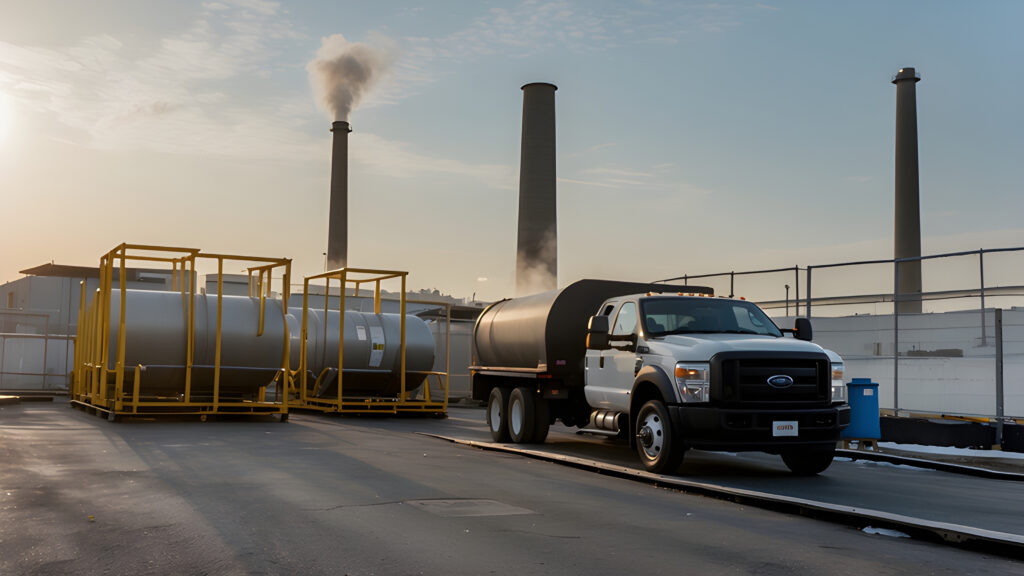
Hudson County is a weird animal. You’ve got dense mixed-use towers on the Jersey City waterfront, aging brick-and-steel industrial stock in Bayonne and Kearny, wastewater and processing plants near Newark Bay, and warehouse-plus-data-center corridors around Secaucus Junction. Each of these swallows PCD duct for different reasons.
What kinds of Hudson County facilities specify PCD duct most often? Labs, wastewater plants, chemical processors, and any waterfront industrial site downwind of Newark Bay. If your project sits within a mile of tidal water and handles corrosive exhaust, someone’s engineer already spec’d PCD (or should have).
Look, the Hudson River and Newark Bay don’t play nice with sheet metal. Salt spray, freeze-thaw cycles, and that constant humid pull off the water eat galvanized duct alive, especially on rooftop equipment along Route 440 and the Port Jersey stretch. I’ve seen ten-year-old bare steel exhaust systems fail so badly the flanges crumbled in a maintenance tech’s hand. Not exaggerating.
That’s the whole reason PCD exists as a category. The bonded polyvinyl layer keeps the steel substrate isolated from chlorides, acids, and moisture-loaded exhaust streams. Done right, with proper coating mil thickness matched to the chemical profile, you’re looking at service life measured in decades instead of years. Done wrong (thin coating, sloppy seam sealing, no attention to flanged connections), it fails almost as fast as the bare steel it replaced.
Coating thickness matched to exposure. Seams welded and re-coated, not just taped over. Flanged connections gasketed with chemically compatible material. Underground burial with proper support, drainage, and coating inspection at every joint. When we fabricate PCD at our Kearny facility, we’re running our 250-ton Accurpress and CNC laser lines to hold tolerances that let field crews assemble without butchering the coating. If your fabricator’s tolerances slip an eighth of an inch, the field welder scars the coating trying to force alignment, and you’ve built in a corrosion failure point on day one.
Real talk. The single biggest hidden cost on a PCD job isn’t the material. It’s the labor bleed when duct arrives with sloppy dimensions and your sheet metal foreman has to modify pieces on a 40-foot lift. We fabricate to SMACNA performance standards across the whole line, whether we’re building single-wall exhaust risers or double-wall insulated corrosive-duty runs for a lab retrofit in Hoboken.
Our shop processes galvanized (18 to 26-gauge baseline), stainless for cleanroom and pharma, aluminum for rooftop loads, plus copper, galvanneal, and PCD for the specialty jobs. When an engineer specs a duct system for a wastewater exhaust replacement near Port Jersey, we’re not guessing at coating compatibility. We’ve done that job. Multiple times.
The estimating side matters just as much. We ingest blueprints, Revit files, CAD, and take-off sheets and return itemized quotes in 4 to 24 hours. Contractors bidding against 72-hour paper-quote fabricators use that speed as a straight competitive weapon. If you want the process side explained, our team walks through it in our custom SMACNA spiral and rectangular duct breakdown.
Here’s a story. Last spring we had a corrosive exhaust retrofit at a processing plant off Route 1/9 near the Pulaski Skyway. GC gave us a 5-hour install window on a Saturday because the plant couldn’t take extended downtime. Standard freight would’ve dropped the PCD sections at 10 or 11 AM (assuming the Skyway didn’t back up, which it always does). Our fleet had the duct, hangers, sealants, and hardware on the deck at 5:47 AM. Crew clocked in at 6, started installing at 6:15. Done by noon.
That’s not a marketing slide. That’s how we protect our contractors’ labor margins across all 21 New Jersey counties, the five NYC boroughs, and eastern Pennsylvania. Fragmented supply chains where you’re chasing duct from one shop, hangers from a distributor, and sealants from a third vendor? That’s financial suicide when you’ve got mechanics standing around at 8:00 AM waiting for pieces.
Our headquarters at 181-183 Garfield Ave, Kearny, NJ 07032 sits close enough to the Turnpike Eastern Spur, Route 7, and the Pulaski approach that we beat the morning gridlock. That’s geographic strategy, not luck.
How early can PCD duct actually get staged on a Jersey City waterfront job site? Our fleet targets 6:00 AM deck delivery, which means beating the Holland Tunnel and Turnpike Eastern Spur morning congestion by moving out of Kearny before 5:30 AM.
You cannot ship PCD duct into a Hudson County job without understanding how each town’s construction office handles mechanical inspections. Jersey City Division of Construction Code, Bayonne Building Department, Hoboken Construction Code Office, Kearny Construction Department, Secaucus, North Bergen. They each have their quirks. Fire ratings, penetration details, hood approvals, exhaust discharge locations.
Our shop drawings and submittals are built to match the New Jersey Mechanical Code and the specific documentation each local inspector wants to see. When a mechanical engineer in Jersey City needs product data sheets showing coating type, temperature limits, pressure ratings, and chemical resistance profiles, we send it same-day. When an EH&S manager at a Bayonne facility needs as-builts for future maintenance, we provide them. That kind of paperwork discipline is what keeps stop-work orders off your project.
Does your PCD duct meet SMACNA leakage class requirements for medium-pressure exhaust? Yes, our fabrication holds SMACNA Class 3 and better where specified, with seam integrity verified on the shop floor before the duct ever leaves Kearny. More detail on how seam welding drives leakage results lives in our SMACNA Class A compliance breakdown.
I’ve watched project managers try to save nickels by splitting orders across three vendors. Duct from us, hangers from a distributor two towns over, sealants from a big-box supplier. Then the sealants arrive on the wrong day, the hangers are the wrong gauge, and the mechanics eat two hours reconciling a bill of materials on the roof.
Bundle it. We deliver PCD sections, fittings, transitions, plenums, hangers, support systems, gaskets, sealants, and installation hardware together, on one truck, on the same clock. That’s not a value-add. That’s just how competent supply chains function.
Can a single supplier really handle both the PCD fabrication and the installation hardware for a Kearny wastewater retrofit? Yes, and that’s the whole point of our procurement model. Consolidated delivery removes about six touchpoints from a typical field install.
What’s the standard lead time for custom PCD fittings on a Secaucus warehouse ventilation project? Standard runs 5 to 10 business days depending on complexity and coating profile, with rush windows available when the drawings are clean and complete.
Here’s what I’d tell a mechanical contractor sitting on a big Hudson County PCD bid tomorrow: the supplier’s real value shows up in three places. Estimating speed, fabrication tolerance, and delivery discipline. Everything else is decoration.
If the answer to any of those is no, you’re looking at margin erosion before the first piece gets hung. We’ve built our shop around answering yes to all three, and honestly, that’s the only reason contractors keep coming back after eleven years. You can see how the same discipline applies across our full custom ductwork service.
How does PCD stack up against solid PVC or stainless for a Bayonne lab exhaust upgrade? PCD gives you steel’s structural rigidity with polyvinyl’s chemical resistance, which usually beats solid PVC on long runs and beats stainless on first-cost for non-high-temp corrosive service. Trade-offs depend on the specific chemistry.
Follow us on LinkedIn and Facebook for shop-floor updates and project stories. Or just call. We’re direct people.
Written by: Arthur Dabrowski
HVAC Metals, LLC
(201) 991-2206